

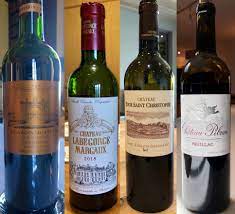
Bordeaux wineries saw second wines as a way to make use of any grapes left over from a harvest. These wines are lighter than their first wine counterparts and have a lower price, but they are still very affordable.
Chateaux and investors are now looking for Second Growth wines from First Growth wineries to make serious investments.
Investing in Second Wines: The Price Gap between First and Second Wines
You don’t have to spend thousands on a vintage Mouton Rothschild to see a return on your wine investments. Many Bordeaux second wines offer healthy returns at a more accessible price.
Between 2015 and 2019, there has been a steady decline in the price gap between First Growths wines and second wines. Before that, you could buy 5.6 bottles of second wines for one Grand Vin. This ratio fell to 2.8 bottles at its peak.
There are a few reasons why this is so.
- The quality of second wines has improved. A wine estate generally has more grapes to choose from. This allows it to pick the grape it uses. Each grape used to make the second wine is of higher quality.
- Second wines can be a much more affordable way to invest in wine. An 18-ounce bottle of Chateau Lafite Rothschild is approximately $1,160, while a Carruades de Lafite bottle costs $405 in the same vintage. Many second-label wines are almost identical to first Bordeaux wines.
The more expensive the wines were, the more attractive the second wines became.
However, recently, wine prices from First Growth estates have started to rise again.
This widening price gap presents exciting opportunities for wine investors.
We will give you more reasons not to overlook second wines.
Why not invest in second-label wines over first wine?
Let’s look at why second-label wines make a solid fine wine investment.
Many second wines today are much better than those made in the past. They can even be more than top wines from the 1970s and 80s. This makes them an “investment-grade wine.”
Many first-growth estates, such as Chateau Latour or Chateau Margaux, have also introduced third wines to improve the quality of their second wines.
The markets confirm this. The Livex Second Wine 50 index is a fine wine market that tracks second wines from First Growth estates such as Chateau Margaux and Mouton Rothschild. This index was the most performing sub-index of the Bordeaux 500, rising 56% in five years and 805 % since 2003.
2011 Le Petit Mouton de Mouton Rothschild ($343)
The red wine offers a deep nose of fruit reminiscent of cherries and orange zest with hints of oak. The palate provides a full, fruit-driven flavor with notes of spice and vanilla on the finish.
2009 Pavillon Rouge du Chateau Margaux ($292)
A delicate nose of tobacco underpinned by fresh blackberries and nougat. Ripe cherries with a fine sweetness define a juicy palate before finishing with subtle minerality.
2006 Chateau Lafite Rothschild ‘Carruades de Lafite’ ($436)
Refined aromas of cassis and blackberry define the nose. The elegant and full-bodied palate packs flavors of dark chocolate and orange zest into an elegantly structured wine.
2000 Chateau Latour ‘Les Forts de Latour’ ($322)
A floral bouquet with notes of eucalyptus. A well-balanced and intense palate with flavors of black fruit laced with mint.
2005 Le Clarence de Haut-Brion ($186)
A red wine blend with delicate notes of elderberry complementing a bouquet of dark berries before flavors of sour cherries and citrus zest lead to a berry finish.