

These wine tips will help you understand the nuances of wine language and wine etiquette that wine connoisseurs use.
There are many quirks in the world of wine.
Have you ever seen a group of sophisticated wine drinkers pour out hundreds of dollars of wine? This is very common at professional tastings!
Here are 10 wine tips to help you pretend it’sit’s possible.
Try “Interesting” if you aren’t sure what to say.
This is the non-committal adjective for the year! Do not panic! Just swirl your wine and then mutter “Interesting …”””” to yourself. This will give you time to try and remember what a peach is, or if you have to decide if you hate the wine in your mouth.
Keep your glass at the stem or base.
Although it might sound like something to be worried about, it is very practical. Wine professionals are very concerned about wine temperature. (We’veWe’ve seen arguments over one degree: it was ugly).
A glass held in a certain manner is a secret handshake for the wine elite.
It might be “closed” if you cannot smell the wine.
Most people should smell any wine, regardless of how subtle it may seem (unless you have anosmia). Some wines can be difficult to discern aromas.
Why? There are many reasons. Wines can sit in a wine bottle for up to a year without oxygen. This state is where chemical reactions that age wine use other elements, besides an “O”, to accomplish their task. This is why decanting wine (especially reds) is so crucial!
The expression “expressive” is a winner.
Are the aromas of wine crazy fragrant, like a spray of perfume? Are the aromas as talkative and flamboyant as your aunt, who was drunk at a wedding?
It’sIt’s a bit like describing a friend as being “expressive” but it sounds more natural to use the word “expressive” rather than “they won’twon’t shut up.” We don’tdon’t think so! You might also like: exuberant, flashy, vibrant, animated. Showy. Bountiful. Magnanimous. Your 8th grade English teacher would be proud. ).
Spitting, contrary to common logic, is considered classy.
This is one of the most bizarre wine tips. You don’t have to spit all the time. Spitting is great if you have to go through a lot of bottles. It helps you stay sober and focuses on the ” taste” of your food, rather than “drinking”.
Practice your spitting skills.
Strangely, the term “spicy” doesn’tdoesn’t even belong to a wine.
“Spicy” in wine is not a term. This isn’t very clear when you consider the actual spices that appear in tasting notes: anise and cloves, black pepper, cinnamon, and so on.
High alcohol wines are referred to as “hot.”
Consider alcohol as burning your throat and emitting fumes like boiling water. That’s what we mean when we say “hot”.
Wine can be made with a wide range of alcohol levels, starting at 5% up to 24%.
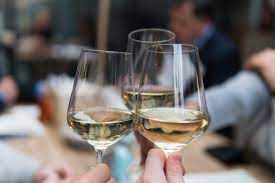
Clanking is a great practice!
There are many theories about the origins of the practice of clinking glasses. It is not clear that the tradition started with paranoid leaders mixing wine to avoid poisons.
One thing is certain: The bowl is the most powerful part of the glass. It also helps to make the wonderful bell sound that has become the national anthem for wine drinkers around the globe. It’sIt’s good manners to look at your toasting partner in their eyes. It would be not polite to slow dance with someone while looking over their shoulder. Consider putting off answering that question…
Fruit-forward vs earthy: know your preference!
Although there is no scientific evidence to support this, wine tends to be divided into wines with fruitier flavours and wines that have more earthy, savoury, or “”terroir-driven” notes. You can see the difference between a bold, big red wine with lots of berry flavours and a more lean, bracing red with complex flavours that hint at the earth from which it sprung.
Both are welcome at any tasting. However, knowing your taste will help you avoid spending too much on wine that you don’tdon’t enjoy.
Do you need some words to describe these wines? These wine terms are very popular.
If all else fails, blame the Terroir.
Terroir may be the most overused and misused word in wine.
Terroir is a combination of all factors that contribute to uniqueness. It includes the soil, weather, culture, geography, and other factors. (And a lot more depending on who you ask). It is why a Sauvignon Blanc from France tastes different to a Sauvignon Blanc made here in New Zealand. Science has very little insight into what’s happening.
For now, however, if you cannot explain why wine tastes the way they do, it could be the region.