

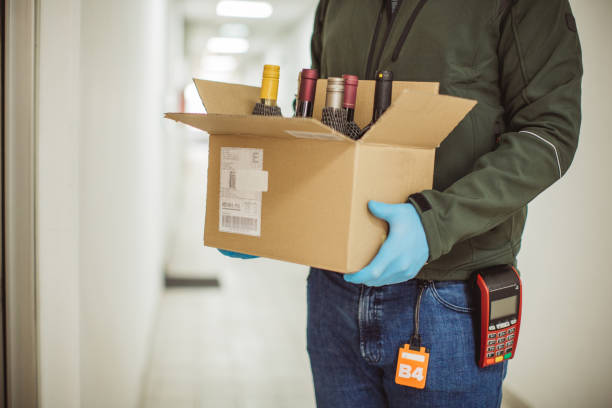
Send 12 bottles, and don’t be greedy. 1 full case. Send 12 bottles if you have only one SKU.
Send 4 cases each if you have 3 SKUs. Send 4 cases if you have 12 SKUs. You must send at least 4 bottles per SKU. Even if it’s a spirit, double that for beers. The use of your product is the best marketing investment. This will not only cost less but also have the greatest impact. This is how the distributor is using the samples.
Owner-run distributors make up the majority of small- and medium-sized businesses. They are also the decision-makers and often sell wine on the streets. All of them arrive Friday morning for their Friday sales meeting. They collect samples for Friday’s store tasting, collect accounts sheets from admin to collect money, and then they get to “decide on new products and market needs” based on what is being said on the streets. The boss, the wine buyer, and reps will be in the meeting room to open your samples at 10 a.m.
Send samples in branded cases. They can instantly verify that the packaging and branding are authentic.
For small and medium distributors, this is an important element. It makes it easy for them and the warehouse personnel to locate your product. When I worked as a consultant for a wholesaler, I wouldn’t say I liked white boxes. Sturdy branded cases were my favorite…my team could easily hold them. Standard bottle sizes were my favorite, so everything fits nicely on the pallet. Pay attention to the small details: You need to be a preferred supplier. So, the last thing you want to give is tall bottles of white wines (no offense to producers, but this will work against you in most cases). Imagine the same thing happening to the retailer. They have less space and more resources.
Let’s get back to the samples.
Suppose you have a nice box of wine-marked samples in your distributor’s office. The distributor takes the wine out of the office and checks your pricing ….. They must return to their laptop to verify who you are and your pricing. And then, there’s your email. It contains many attachments about the winery but not much about how they will sell it. Here’s a tip: Send two emails. One about your story, one with the title “Support Pricing and Marketing Program Attached for Your Samples Meetings”.
Send them an email explaining why they should buy and how you can help them sell. Include the launch deal, sample sales deals, and details about the program. The email should be a PDF they can print out and bring to their meeting. It should include base pricing, all the details and other pertinent information. Tip: Try to do line pricing for your SKUs. Simple pricing is what I prefer. For example, $48 per cs for all varietals or $4 per bottle for all, instead of $62 to $73 for Merlot and $73 for Shiraz. While you may make some extra money and lose money on certain SKUs, it is important to keep them line-priced for both distributors and retailers. Many suppliers choose cost-based pricing. It’s okay to make 70% on certain products and 20% on others. However, when you launch your product, you should consider line pricing. If you want to sell 100,000 cases of a brand, then buy bulk wine and test line pricing. If you are unable to sell 100,000 cases, don’t. Below is the line pricing for my wines for the year 2011.
There was one deal: 10 pallets mixed and matched between my brands. I will pay the shipping costs to their warehouse.
I am trying to convey this information clearly and concisely. It should also be available when the consumer is tasting the product.
Include point-of-sale material in the box. This is very important.
Show them real photos and tell them that you can make custom shelf-talkers or case cards if necessary for chain accounts. The photo shows one of the case cards I made for Festival Foods’ chain floor placement.
Reps and distributors want to see your sales scores and marketing materials (that they can sell).
Participating in wine competitions can help you go further by selling your wines at such extraordinary times.
Include “pricing” and a “personal note” in the sample box.
This is something that not many people do. This was how I sold my wine, and it was something I enjoyed when I was buying wholesale. This means that I don’t need to open my laptop to print. All the items are in the box. I have also included a letter listing the products and a business card so I can immediately call the supplier if I have questions. Encourage them to contact you immediately if they have questions during their tasting.
They have now tasted your bottles and found one missing person. Your chances of getting a 50% chance are slim if you don’t have another bottle. Maybe another supplier had the extra bottle, and the key person could taste it on Monday. This is where the extra 3 bottles can help. One can be used to taste for people who could not sample in the distributor’s store.
These are the other 2 bottles.
Distributors may want to sell your product. They will give 2 bottles to their sales reps who also like your product. Then, they will take the product to their retailers to show them and ask for their feedback. Some might try to pre-sell. Sometimes retailers might ask for one bottle. The distributor won’t say no to their account if they don’t want to. Always give them extra bottles and let them pre-sell. It’s better. It was great when distributors pre-sold my wine before buying…because it meant that depletion would occur quickly and I would get another order soon. I would also get paid soon. It will help the sales rep to make their first presentation to their customers by indicating the point of sale.
If the distributor has not yet decided on your product and is left with an extra bottle, send them a follow-up email within a week. They may try your product again or open it again. If they don’t decide in the first batch, it helps.